Why Are Foreign Institutional Investors (FIIs) Leaving India — And Why Aren’t They Coming Back?

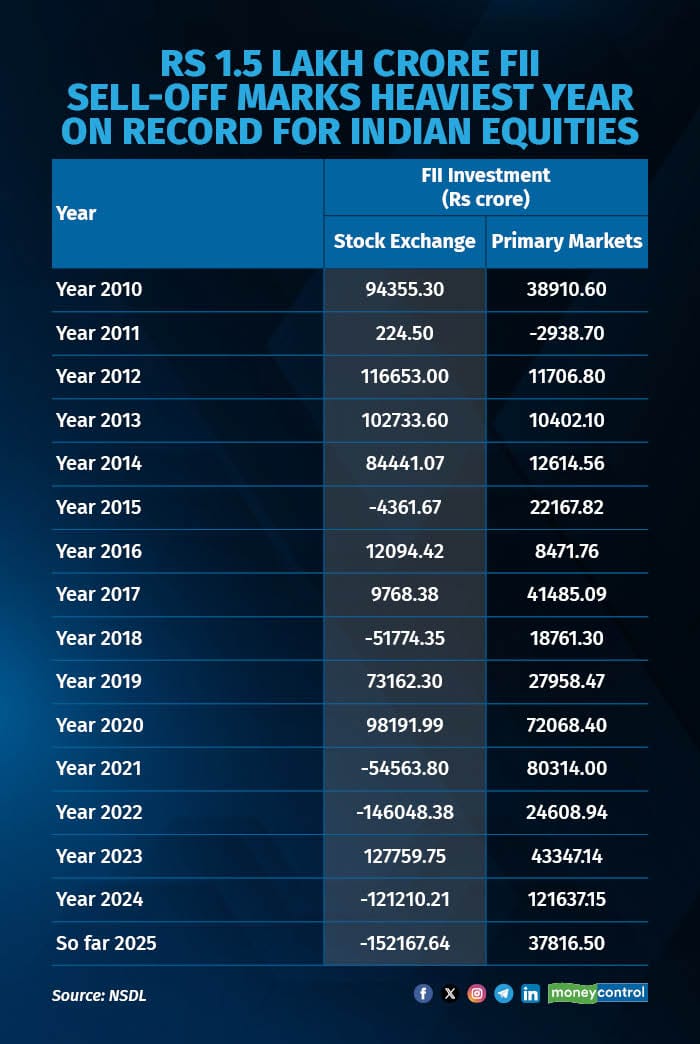

For years, Foreign Institutional Investors (FIIs) were considered the backbone of the Indian equity market. Heavy FII inflows often meant bull markets, rising valuations, and global confidence in India’s growth story.
That assumption is now outdated.
In 2025, India has witnessed one of the largest FII outflows in its market history, estimated at nearly ₹1.6 trillion, and unlike previous cycles, FIIs are not returning the following year. This break from historical patterns signals a deeper structural problem.
Let’s examine the real reasons — not narratives, not excuses.
1. Currency Depreciation Is Destroying Real Returns
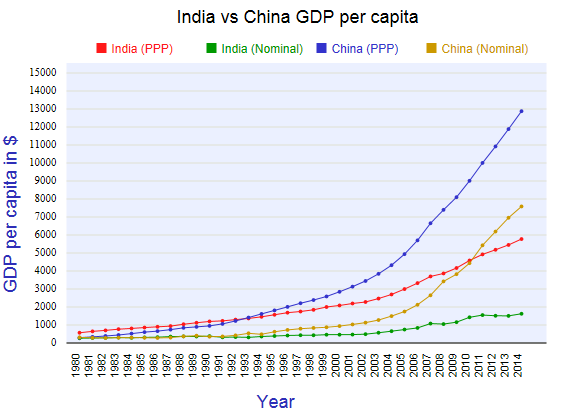
FIIs invest in foreign currency (USD), but earn returns in Indian Rupees (INR). What matters to them is dollar-adjusted returns, not headline Nifty CAGR.
The harsh math:
India’s rupee has depreciated at ~3.5% annually over the last two decades.
Even a 12–13% equity return gets significantly eroded after:
In many cases, FIIs earn excellent market returns but zero dollar returns when they exit.
By contrast:
China’s currency has depreciated only ~1% annually
Currency stability converts equity gains into actual wealth
Conclusion:
For FIIs, India looks like a treadmill — lots of effort, little progress.
2. Capital Gains Taxes Reduce Net Returns Further
India has steadily increased Long-Term Capital Gains (LTCG) tax:
Earlier: 0%
Then: 10%
Now: 12.5%
This is a direct hit on post-tax returns.
Meanwhile:
China, Taiwan, and several competing markets do not levy LTCG tax on FIIs
FIIs don’t complain emotionally — they simply reallocate capital.
Key point:
When two markets offer similar gross returns, capital flows to the one with:
Lower taxes
Lower friction
Higher certainty
India fails on all three.
3. Valuations in India Are Uncomfortably Expensive
Post-COVID, Indian markets delivered exceptionally strong returns, especially in:
That success has created a new problem: overvaluation.
Remove PSU banks and a few low-PE government companies
The effective PE of large-cap indices rises toward 40–50
Earnings growth remains 12–15% at best
This is not a margin of safety — it’s a valuation trap.
FIIs don’t chase momentum blindly. When risk-adjusted returns fall, they exit.
4. Better Growth Opportunities Exist Elsewhere (Especially China Tech)
For years, India benefited because China was:
Politically restricted
Regulatory-heavy
Unattractive to foreign capital
That has changed.
China is aggressively pushing:
Automation
Advanced manufacturing
Examples (illustrative, not hype):
AI chip companies: 300%+ returns
Semiconductor firms: 200%+ returns
Tech indices delivering 13–14% CAGR, with currency stability
So if:
India gives 13% CAGR + weak currency + tax
China gives 13% CAGR + stable currency + no LTCG
The decision is obvious.
5. India’s Export Weakness Keeps the Rupee Fragile
Currencies don’t weaken randomly. They weaken due to structural trade deficits.
India’s problems:
Persistent current account deficit
Heavy dependence on:
Oil imports
Gold imports
Weak high-value exports
China, by contrast:
Runs ~$1 trillion annual trade surplus
Forces global demand for its currency via exports
Accumulates massive forex reserves
A weak export engine means:
Rupee depreciation is structural, not temporary
FIIs price this risk in advance
6. Currency Hedging Is Costly in India
Yes, FIIs hedge currency risk — but hedging is not free.
Higher currency volatility = higher hedging cost
INR volatility is significantly higher than CNY
Net returns shrink even further after hedging
At some point, FIIs ask a simple question:
“Why bother?”
7. India Is Lagging in New-Age Tech Listings
Global capital today is chasing:
AI
Semiconductors
Data centers
Advanced hardware
India’s reality:
Very few globally competitive tech-product companies
Most innovation is:
Service-based
Back-end
Captive to foreign firms
Until India creates homegrown, listed, scalable tech leaders, FIIs will remain underweight.
8. Retail Investors Are Replacing FIIs — A Risky Signal
Domestic retail investors are currently absorbing FII selling.
This is not inherently bullish.
History shows:
Retail-driven markets without institutional support are fragile
Liquidity dries up quickly during global stress
FIIs are not emotional — they are forward-looking. Their exit is a warning, not noise.
Final Verdict: Why FIIs Are Staying Away
FIIs are not avoiding India out of pessimism — they’re avoiding it due to math.
The three core reasons:
Currency depreciation erodes dollar returns
High taxes reduce post-tax profitability
Better risk-adjusted opportunities exist elsewhere
Until India:
Stabilizes the rupee via exports
Rationalizes capital gains taxation
Builds globally competitive tech sectors
FIIs are unlikely to return in force.
This is not a short-term cycle.
It is a structural reallocation of global capital.
And pretending otherwise will only delay the solution.


Comments
Post a Comment